


Holidays to Madagascar, Made for You
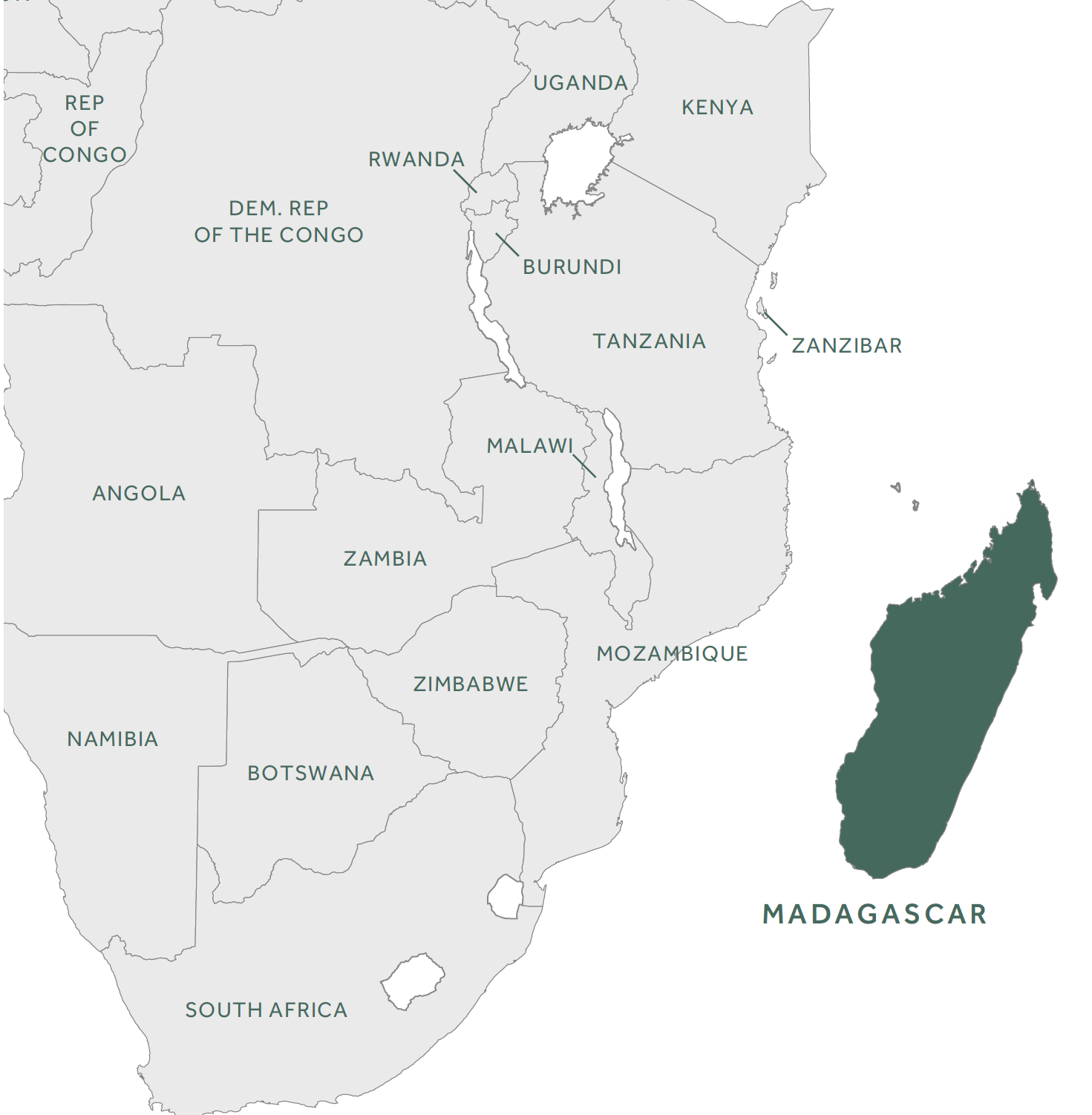
It’s a sentence that’s rarely true, but there’s nowhere else in the world quite like Madagascar. Isolated from mainland Africa for millions of years, the island has evolved into one of the most biologically distinctive places on Earth.
Madagascar holidays are centred on the country’s remarkable natural history, where indri call through eastern rainforests, baobabs rise above western dry forests, and limestone tsingy formations have been carved over millennia. As the UK’s leading tour operator to Madagascar, we have developed deep, first-hand knowledge of its contrasting regions, wildlife habitats and remote coastal landscapes.
Our experts draw on their extensive knowledge to guide you around the regions and experiences that appeal most to you. We also support Money for Madagascar, which helps fund community and conservation initiatives, ensuring your holiday contributes to both wildlife protection and the communities who call the island home.
Explore Our Madagascar Holiday Ideas
Discover our range of sample tailor-made tour itineraries and small group tours for your holiday in Madagascar. From an adventure exploring the humid rainforests and seasonally dry woods to a luxurious and relaxing break off the sublime north-west coast, there are plenty of ways to experience this spectacular island.

Madagascar Wildlife Discovery Tours 2026 & 2027
15 nights from £5,420 p/p

Madagascar Rainforests, Wildlife, Tsingy & Beach
12 nights from £5,555 p/p

Madagascar Made Easy Deluxe
12 nights from £7,665 p/p

Madagascar Reef & Rainforest
12 nights from £4,725 p/p
Our expertise in Madagascar

I’d love to create your perfect destination experience to Madagascar . Give me a call and I’ll share my first-hand expertise so you get the most from your trip.
Travel Specialist
Derek's review
While technically you could visit Madagascar year-round, the climate is so (surprisingly) diverse across the country that the month you decide to travel in is pivotal in terms of determining which regions – or even sub-regions – you will or won't be able to explore. It's also crucial to ensure that, before you travel, you secure the services of capable and experienced guides so as to make the most of the time you have.
More than 90% of first-time visitors want to see some of the country's wildlife, much of which is endangered. Scattered around the country is a large selection of protected areas. We can arrange visits to those which allow access to tourists. Discover hugely popular national parks such as Isalo National Park and Andasibe-Mantadia National Park and new sites like Andrafiamena Andavakoera, Loky-Manambato and magnificent Tsingy de Namoroka, which our clients come back raving about.
Derek's Top Tips
- Madagascar's essence lies in its contrasting habitats, so if you're a first-time visitor, you should aim to explore at least one key eastern rainforest site (Andasibe-Mantadia National Park is pivotal). The direct opposite can be experienced by then going to the sub-arid south. To complete your overview, add a tropical deciduous forest in the island's western half.
- The more desirable lodges servicing popular protected areas like Andasibe-Mantadia National Park, Ranomafana National Park, Ankarana Special Reserve and Montagne d'Ambre National Park (Amber Mountain National Park) are subject to an intense international 'bunfight' for rooms a year or more in advance. So, book early to avoid disappointment.
- The country's most enjoyable microclimate is the Sambirano Domain in the far northwest. There, we work with a reputable, responsible outfit (based on Nosy Be) which can take you whale watching from July to September; look out for whale sharks from October to December and observe marine turtles on coral reefs year-round.
Best Time To Visit Madagascar
Best time
Good time
Average time
Quick Country Facts
Time Zone:GMT +3 hours
Capital:Antananarivo
Currency:Malagasy Ariary
Madagascar travel guides


Why Choose a Tailor-Made Holiday to Madagascar?
Madagascar is widely regarded as one of the most biologically distinctive destinations on Earth. Separated from mainland Africa around 165 million years ago, the island has evolved in isolation, resulting in extraordinary levels of endemism – with around 80% of its wildlife found nowhere else. Roughly 5% of the world’s known plant and animal species occur here, concentrated across dramatically different landscapes within a single island.
For most visitors, the island’s wildlife is the main draw. Madagascar is home to more than 100 species and subspecies of lemurs, alongside fossa, tenrecs and an astonishing diversity of reptiles, amphibians and birds. From the world’s smallest and largest chameleons to over 400 species of frog – 99% of which are endemic – the scale of rarity, too, is remarkable. On a wildlife holiday, you'll explore these habitats on foot with expert guides, allowing you to experience this natural history at a respectful distance.
The country also offers striking geographical contrasts within relatively short distances: humid eastern rainforest, baobab-dotted western dry forest, limestone tsingy formations, sub-arid southern landscapes and warm Indian Ocean shores. A tailor-made holiday to Madagascar allows you to travel between these regions in a way natural to you – spending time in wildlife-rich reserves before heading to coral reefs for snorkelling, seasonal whale watching, or a few days on remote island beaches.
A melting pot of Malayo-Polynesian, African and European cultures is present throughout your journey too, expressed through local markets, village life and intriguing Malagasy traditions.
Derek Schuurman
Travel Specialist
What Can I Expect on a Madagascar Holiday?
Madagascar holidays often move through two or three contrasting regions, allowing you to experience the island’s varied habitats and wildlife in context. Travel is typically by a combination of light aircraft, 4×4 vehicles and the occasional boat transfer, linking rainforest, dry forest and coast according to season and accessibility.
If you want a broad introduction to the island’s landscapes and wildlife, a tailor-made journey such as Madagascar Rainforests, Wildlife, Tsingy & Beach connects the humid eastern forests of Andasibe-Mantadia with the dramatic limestone formations of Ankarana, before ending on a remote northern shore. You can encounter indri and other rainforest specialists, rare chameleons and baobabs, followed by time beside the Indian Ocean. In season, whale or whale shark excursions can also be arranged around the Nosy Be archipelago.
If you prefer a fully escorted experience, Madagascar Wildlife Discovery offers a small group format focused on protected areas and endemic species. You travel overland between parks with experienced Malagasy wildlife guides, exploring habitats that range from eastern rainforest to southern spiny bush. Walks vary in length and terrain, and a reasonable level of fitness is important, as some reserves involve several hours on uneven trails. Time in the south-west quarter provides a welcome contrast after the forested interior.
For a shorter, more comfortable introduction, Madagascar Made Easy Deluxe begins in the eastern rainforest before continuing west to the remote and exclusive Anjajavy on the coast. Here, you can observe flagship rainforest species before flying across to dry forest habitats, baobabs and quiet beaches, with less overland travel required.
If you’d prefer to build your itinerary from the ground up, our Madagascar experiences are a good place to begin. You might join a guided night walk in Kirindy Forest to look for nocturnal wildlife such as the pale fork-marked lemur or the endemic giant jumping rat, explore limestone tsingy formations with specialist park guides, take an early morning walk through the spiny forest to look for endemic birds and drought-adapted plants, or snorkel coral reefs where marine turtles are regularly seen.
Once you have a sense of what interests you most, share your ideas with our specialists, Helen and Derek. Drawing on their long-standing experience across Madagascar’s regions, they can advise on timing, logistics and how best to link rainforest, dry forest and coast in a way that works for your travel dates and priorities.
Where to Visit in Madagascar
Where you choose to travel in Madagascar determines the wildlife you encounter, the landscapes you explore and how your time is structured.
Eastern Rainforests
If seeing lemurs is a priority, the eastern escarpment is often central to your itinerary. Parks such as Andasibe-Mantadia and Ranomafana protect humid mid-altitude rainforest where indri, sifakas, and a wide range of endemic birds, reptiles and amphibians can be observed. Trails vary from relatively gentle forest walks to more demanding routes in primary rainforest, and night walks reveal mouse lemurs, chameleons and tree frogs.
Western Dry Forests & Tsingy
In contrast, the west and north-west offer dry deciduous forest, towering baobabs and dramatic limestone tsingy formations. Areas such as Ankarana and Tsingy de Bemaraha are known for their sculpted rock pinnacles, caves and rare species adapted to drier conditions. Access here is more seasonal and road conditions can be challenging outside the main dry months.
The South
The far south presents a markedly different environment, with sub-arid terrain and the distinctive spiny forest ecosystem found only in this part of the island. Around the coastal village of Ifaty, the peculiar “spiny bush” supports a highly specialised collection of drought-adapted plants alongside locally endemic lemurs and birdlife.
Further inland, Isalo National Park is known for its dramatic ruiniforme sandstone massif, where walking trails lead through dry canyons, natural pools and pockets of streamside vegetation sheltered within the rock formations. Along the RN7 corridor nearby, Zombitse-Vohibasia National Park protects a wildlife-rich transition linking the western dry forest with southern ecosystems.
Beaches & Islands
If you would like time by the sea, the north-west coast’s beaches and offshore islands provide coral reefs, marine reserves and remote lodges. Around Nosy Be and neighbouring islands, you can snorkel, dive, watch seasonal whales or whale sharks, and relax between forest visits. Coastal stays are typically positioned at the beginning or end of a trip, offering contrast to time spent in protected areas.
The Best Time to Visit Madagascar
You can visit Madagascar for much of the year, but timing has a direct impact on which regions are accessible and what wildlife you’re likely to encounter. In general, the most reliable travel window runs from April or May through to November, when conditions are drier and overland routes are easier to navigate.
The eastern rainforests are humid year-round, with heavier rainfall typically between December and March. The far north and west, including areas around Ankarana and the Nosy Be archipelago, are generally best from May to October, when tsingy formations are accessible and sea conditions are calmer. Whale watching off Île Sainte-Marie and Nosy Be is usually at its peak from July to September, while whale sharks may be encountered around the Nosy Be archipelago from around October to December.
The semi-arid south receives far less rainfall than the east and can be visited year-round, daytime temperatures frequently reach the high 30s°C and may exceed 40°C during the hottest months between November and February. Conditions are typically dry and sun-exposed, and long overland drives or walking trails in national parks such as Isalo can feel intense under the strong southern sun.
Access to some reserves, road conditions in remote areas and the likelihood of specific marine encounters all shift across the year, so timing plays a central role in planning a successful trip. Helen and Derek will advise you on the best timing for the different regions and experiences you would like to prioritise, helping you travel when conditions are most favourable.
What's Included in Our Madagascar Holiday Packages
Our Madagascar holiday packages from the UK include core travel arrangements required for your itinerary, with guiding, transportation and park access organised in advance.
This covers international return flights, internal light aircraft where needed, private 4×4 transport with driver, airport transfers, park permits and entrance fees, and the services of experienced Malagasy guides. Accommodation and meals are provided as listed in your itinerary, and all scheduled activities and guided excursions are arranged prior to travel.
Helen and Derek oversee the routing and logistics for each Madagascar holiday, advising on internal flight schedules, overland travel times and seasonal access to ensure connections run smoothly.
Price Includes
- Return international flights as per the itinerary
- All airport taxes and security charges
- Accommodation and meals as listed
- Transfers as indicated
- Activities and guided excursions as specified
- All entrance fees for sightseeing tours as detailed
Price Excludes
- Travel insurance
- Any meals not specified in the itinerary
- Gratuities
- Optional excursions not included in your itinerary
What Types of Madagascar Tours Do You Offer?
Our Madagascar tours can be done either as a tailor-made tour or small group tour.
A tailor-made Madagascar holiday is designed around your specific interests, travel dates and preferred level of activity. You may wish to prioritise wildlife viewing in protected areas, include guided forest walks and night walks, add time on the coast, or incorporate more active elements such as tsingy exploration or longer hikes. Your route, accommodation and pace are built around those preferences, whether you’re planning a wildlife, adventure, or beach holiday. Travel is private, with your own vehicle and guide.
If you prefer to join a set departure with like-minded travellers, our small group tours follow carefully planned routes through key regions of the island. Group sizes are limited to only eight participants, and tours are led by experienced Malagasy wildlife guides with in-depth knowledge of the country’s habitats and endemic species. This format suits travellers who value shared expertise and a structured programme while still being able to access Madagascar’s most important reserves.
Are Your Madagascar Holidays Suitable for Families with Children?
Our Madagascar family holidays are suitable for active children older than ten, as the island is a malarial area with a modest infrastructure and a difficult geography. During a family holiday, you can enjoy watching marine life along the coast, spend time relaxing on sunny beaches and go wildlife viewing in the protected areas.
Children enjoy learning about lemurs, chameleons and other endemic animal oddities. Our talented guides will help track flagship species down for you, also sharing their expert knowledge about how various iconic animals are associated with local legends and folklore.
A good example of a tour you can do is our Madagascar Reef & Rainforest tailor-made holiday. Start in Antananarivo, the capital city, before moving into Andasibe-Mantadia National Park for a rainforest walk into the enchanting mid-altitude rainforest. Then fly to the sunny Sambirano coast for a seaside break at remote Eden Lodge.
Where to go in Madagascar


Madagascar Holiday types
Whether you want to explore the natural world with the whole family or encounter rare species with just a few other travellers, choose the tailor-made itinerary that’s right for you.


Looking for inspiration?
You'll find expert travel guides, holiday ideas and insider tips now on the Rainbow blog

Best Wildlife Holidays for Each Month of the Year

The Six Types of African Safari
Best Time to Visit Madagascar: Weather, Wildlife & When to Go

Best Things to Do in Madagascar: Top Attractions & Natural Highlights

Why Choose Rainbow Tours for Your Madagascar Adventure

Your Guide to Andasibe-Mantadia National Park: Wildlife, Travel Tips & More


Madagascar In Conversation With Hilary Bradt


Inspiring Conservation Initiatives in Madagascar

Antananarivo Travel Guide: How to Get There, What to Do & Where to Stay

Lemurs in Madagascar: The Best Places to See Them in the Wild

Madagascar in Focus: A Journey with Sarah Marshall

‘Beyond the Big Five’: Alternative Nature & Culture Experiences in Africa & Latin America

7 Places to Go to Enjoy Christmas in the Sunshine

African Primates: A Comprehensive Roundup of Our Top Primate Experiences

Kirindy Forest - Endangered Wildlife Among the Baobabs

Top 10 Unmissable Wildlife Experiences to Book Now for 2027
Why Choose Us?
Passionate travel experts
- We've been leading wildlife travel since our first South Africa tours over 25 years ago
- Our Travel Specialists have lived in their specialist area for years
- We work with local guides to immerse you deeper in our diverse range of experiences
Personal & tailor-made
- You'll speak to your own expert who'll share their first-hand knowledge
- We'll make your itinerary seamless with 24/7 emergency contact available
- Your Travel Specialist will listen to ensure you have the best chance of seeing the wildlife you love
Responsible by nature
- We take care to actively contribute to the conservation of environments we visit
- For select countries, we make a charitable donation on your behalf when you make your booking
- We've partnered with conservation experts and NGOs to curate responsible tours



For the latest travel advice from the Foreign, Commonwealth and Development Office check www.gov.uk/travelaware
)