More than twice the size of South Africa’s Kruger National Park, the Niassa Reserve’s 42 000 square kilometers make it not only by far the largest conservation area in Mozambique, but also one of the most extensive protected areas in Africa.
The reserve was first established in 1954, but was abandoned during the hostilities of the 1970s and ’80s. After the peace accord was signed in 1992, the new Mozambican government took a bold, innovative step, entering into an arrangement to manage Niassa Reserve as a public-private partnership.
Since assuming responsibility for the reserve in 1998, the SRN (Sociedade para a Gestão e Desenvolvimento da Reserva do Niassa), together with is partners at Flora & Fauna International, has made great progress in putting Niassa back on the map, with some highly progressive policies on adaptive environmental management and community-centered sustainable development.
Biodiversity
Niassa Reserve is one of the most pristine Miombo wilderness areas in Africa. The vegetation is mostly Brachystegia woodland interspersed with open savanna and dambo wetlands. Small isolated forests occur on the mountains and inselbergs found throughout the Reserve, and there are riparian forests along the perennial rivers. A recent vegetation survey outlined 21 vegetation types with approximately 200 species of trees and shrubs.
Wildlife
Despite the damage caused during the decades of conflict, Niassa Reserve supports a remarkably rich and diverse collection of wildlife. Regular aerial surveys have revealed significant populations of large herbivores with over 12,000 elephant, 9,000 sable and thousands of buffalo, Lichtenstein’s hartebeest, eland and zebra. There are smaller populations of kudu, bushbuck, impala, wildebeest, waterbuck, reedbuck and hippo. Duiker and warthogs abound. Lion, leopard and spotted hyena are common whilst a large population of over 200 African wild dogs occur, making Niassa one of the last great refuges for this endangered predator.
Of particular interest are three endemic subspecies which exist in Niassa but are rare elsewhere, namely: Niassa wildebeest, Boehm’s zebra, and Johnston’s impala. The Reserve has a rich and varied birdlife including the rare Angola Pitta, Pel’s Fishing Owl, and an abundant raptor population including nesting Taita Falcons, Crowned and Black Eagles. The Rovuma region has been designated an Important Bird Area and over 370 species have been recorded so far.
The intention is to establish a wildlife corridor between Niassa and the Selous Game Reserve to the north.

Louise Dean
Travel Specialist


Looking for inspiration?
You'll find expert travel guides, holiday ideas and insider tips now on the Rainbow blog

The Best Safari and Beach Combination for Your Next Adventure

Best Time to Visit Patagonia

How to be a Responsible Tourist

Best Wildlife Holidays for Each Month of the Year
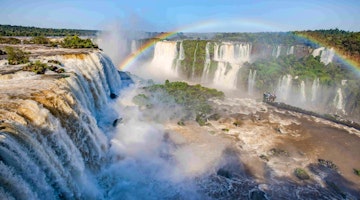
Top 10 Must-Visit Bucket List Destinations: Natural Wonders to Explore in 2026

Lemurs in Madagascar: The Best Places to See Them in the Wild
Why Choose Us?
Passionate travel experts
- We've been leading wildlife travel since our first South Africa tours over 25 years ago
- Our Travel Specialists have lived in their specialist area for years
- We work with local guides to immerse you deeper in our diverse range of experiences
Personal & tailor-made
- You'll speak to your own expert who'll share their first-hand knowledge
- We'll make your itinerary seamless with 24/7 emergency contact available
- Your Travel Specialist will listen to ensure you have the best chance of seeing the wildlife you love
Responsible by nature
- We take care to actively contribute to the conservation of environments we visit
- For select countries, we make a charitable donation on your behalf when you make your booking
- We've partnered with conservation experts and NGOs to curate responsible tours


For the latest travel advice from the Foreign, Commonwealth and Development Office check www.gov.uk/travelaware
)